
Playbook · First-Generation Students
Merit Aid Strategy for First-Generation College Students
First-generation status is one of the most valuable and least-understood tags in the entire merit aid system. This playbook covers where the real money is, which programs to target first, and the structural mistakes most first-gen families make.
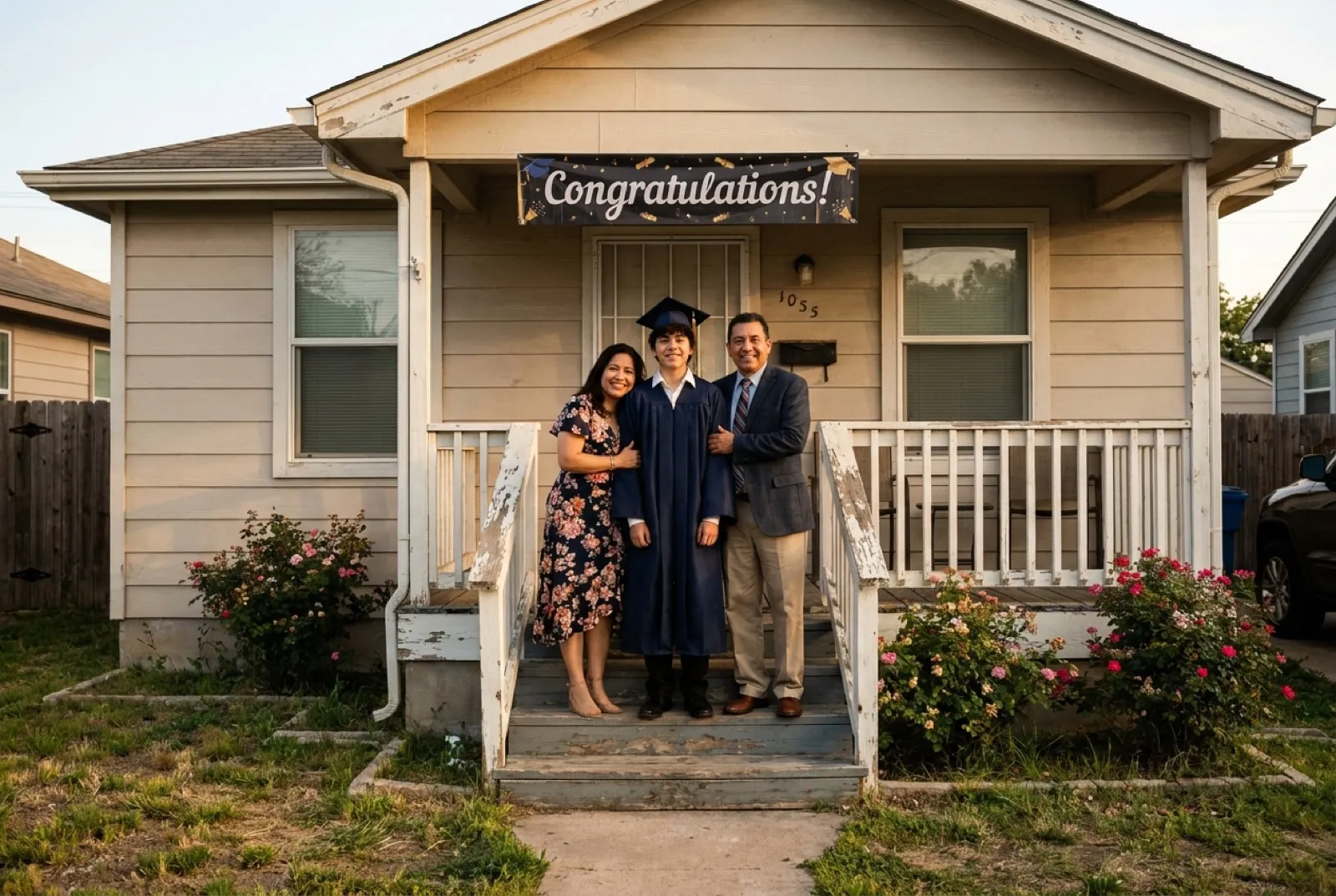
First-generation status carries more weight in admissions and financial aid than almost any other demographic marker, and almost no one explains it clearly. Dozens of schools run first-gen-specific scholarship programs. Most top-50 schools include first-gen status as a significant factor in holistic admissions. Named national programs like QuestBridge, Posse, Cooke, and Horatio Alger funnel tens of millions of dollars exclusively to first-gen and low-income students. The trap: most first-gen families don’t know they qualify for half of what’s out there, because the language lives in admissions offices, not scholarship databases. The strategy for a first-gen student is structurally different from the generic merit-aid playbook. Apply to schools that publicly prioritize first-gen admits, target the named national programs early (many have fall deadlines before regular decision), layer in state and community-foundation awards where first-gen is an explicit criterion, and absolutely file both FAFSA and CSS Profile if any CSS school is on the list. The dollars are there if you know where to look.
Why first-generation status changes the entire strategy
The single biggest mistake first-gen families make is treating the college search like everyone else’s. A student whose parents have a college degree inherits a network of people who know how admissions works, what FAFSA is, what CSS Profile does, and when to start the scholarship search. A first-gen student starts with none of that institutional knowledge, and the financial aid system doesn’t compensate for it automatically.
What the system does offer, buried inside admissions offices and national program eligibility pages, is a category of money that only first-gen students can access. QuestBridge alone placed over 6,700 students at partner schools in the 2024-2025 cycle, with full four-year scholarships. The Gates Scholarship funds roughly 300 students per year at up to the full cost of attendance. The Cooke Foundation transfers approximately $40,000 per year per scholar. These are not small numbers and they are not hypothetical.
The problem is that these programs have early deadlines, require different application materials than the Common App, and use eligibility definitions that vary program by program. A family running the standard college search timeline, submitting everything in January, will miss the majority of the best-funded first-gen programs because the deadlines fall in September through November.
The four national programs every first-gen student should evaluate
QuestBridge National College Match. Deadline: late September. Eligible: high-achieving students from households earning under roughly $65,000. QuestBridge matches students with full four-year scholarships at 50+ partner schools including Stanford, Yale, Princeton, Rice, Emory, Northwestern, and Pomona. A successful match is binding: the student commits to the school and receives a full-ride package covering tuition, room, board, books, and travel. Over 18,000 students applied in the 2024 cycle with approximately 6,700 matched. Students who aren’t matched can still use their QuestBridge application as a substitute for the Common App at many partner schools during regular decision.
Posse Foundation. Nomination-based, not self-apply. Posse identifies students through community organizations, high schools, and partner nominators in 10 U.S. cities. Each Posse scholar receives a full-tuition leadership scholarship at one of 60+ partner colleges. The program sends cohorts of 10 students together to the same school, which provides a built-in community. Families should contact their local Posse city chapter (Atlanta, Boston, Chicago, D.C., Houston, Los Angeles, Miami, New York, New Orleans, or the Bay Area) or ask their school counselor about nomination.
Jack Kent Cooke Foundation College Scholarship. Deadline: November. Awards up to $55,000 per year for up to four years. Roughly 100 scholars selected per year from a national pool. Requires demonstrated financial need (family income under $95,000) and strong academic achievement. The Cooke Scholarship is one of the largest private scholarships in the country by per-student value and stacks with institutional aid at most partner schools.
Gates Scholarship. Deadline: mid-September of senior year. Open to minority students who are Pell-eligible and demonstrate strong academics and leadership. Approximately 300 scholars selected per year. The award covers the full cost of attendance not already paid by other financial aid or scholarships, which means it’s a true last-dollar full-ride. Eligible students are Black, Hispanic/Latino, Asian/Pacific Islander, or Native American.
Two additional programs worth evaluating: the Horatio Alger National Scholarship ($25,000, deadline: October, requires demonstrated adversity and financial need) and the Dell Scholars Program ($20,000 plus a laptop and ongoing support, deadline: December, targets students who have overcome significant obstacles). Both explicitly prioritize first-gen status in their selection criteria.
Case studies: how the first-gen strategy plays out
3.9 GPA, 1380 SAT, Houston public school, parents immigrated from Mexico, no college degrees in the family
Applied to QuestBridge in September of senior year and was matched with Rice University on a full four-year scholarship covering tuition, room, board, and travel. Total package value: approximately $320,000 over four years. Without the QuestBridge match, the family’s expected contribution through FAFSA alone would have been roughly $4,000 per year, but the student would have had to go through the regular decision process and compete for a different mix of institutional aid and loans. The September QuestBridge deadline was the single most important date in this student’s entire college timeline.
Full ride via QuestBridge match4.0 GPA, 1450 SAT, rural Georgia, single-parent household, first in family to finish high school
Nominated for the Posse Foundation through a community partner in Atlanta. Selected as a Posse Scholar and matched with Vanderbilt University on a full-tuition scholarshipworth roughly $63,000 per year. Vanderbilt’s Opportunity Vanderbilt program covered remaining costs (room, board, fees) through need-based aid with no loans. Combined package: effectively a full ride. The student arrived at Vanderbilt with a cohort of 9 other Posse scholars, which provided a built-in support network from day one. Without the Posse nomination, the student had no knowledge that Vanderbilt was even financially possible.
Full ride via Posse + Opportunity Vanderbilt3.7 GPA, 1300 SAT, Chicago suburb, parents both attended community college but did not complete bachelor’s degrees
Did not qualify for QuestBridge due to income slightly above the threshold. Applied through regular decision at Emory, flagged first-gen status on the Common App, and was selected for the 1915 Scholars program. Emory Advantage covered full tuition based on family income under $100,000. The 1915 Scholars layer added a $5,000 research stipend and guaranteed summer programming. Total annual aid: approximately $62,000 against a published COA of $83,000, with the gap covered by federal Pell and state aid. Family out-of-pocket cost: under $2,000 per year.
Under $2,000/year out-of-pocket at Emory3.5 GPA, 1250 SAT, Albuquerque, first-gen, family income $42,000
Applied to the University of Michigan as an out-of-state student, which most families in this position would not consider due to the $57,000 out-of-state sticker price. Michigan’s Go Blue Guarantee technically applies only to in-state students, but the HAIL Scholars outreach connected this student with the admissions team. Through a combination of institutional need-based aid, federal Pell, and a $10,000 per year Kessler Scholars award (which explicitly targets first-gen admits), the family’s net cost came to roughly $6,500 per year. The Kessler Scholars program also provides coaching, community, and professional development.
$6,500/year net cost, out-of-state at Michigan12 merit-friendly schools for first-generation students
Every school on this list either runs a named first-gen scholarship program, participates in QuestBridge, or has a published institutional policy that explicitly prioritizes first-gen applicants in merit and need-based aid decisions. The dollar amounts are based on published program values and recent Common Data Set reports.
- 1
Rice University
QuestBridge partner. Rice Investment guarantees full tuition for families under $75,000 income. Strong first-gen support via the Rice Emerging Scholars Program.
- 2
Vanderbilt University
Opportunity Vanderbilt meets 100% of demonstrated need with no loans for all admitted students. First-gen applicants receive dedicated mentoring and programming through the Vanderbilt Transition Program.
- 3
Emory University
Emory Advantage covers full tuition for families under $100,000 income. QuestBridge partner. The 1915 Scholars program provides first-gen students additional research stipends and mentoring.
- 4
University of Southern California
QuestBridge partner. Norman Topping/Troy Camp scholarship covers full COA for first-gen and low-income admits. USC Match provides free tuition for families under $80,000.
- 5
Northwestern University
QuestBridge partner. Meets full demonstrated need. No-loan policy for families under $100,000 income. First-generation students represented at roughly 14% of incoming class.
- 6
University of Virginia
Blue Ridge Scholars program targets first-gen students with a full-ride package including tuition, housing, and a summer bridge program. AccessUVA eliminates loans for students with family income under $100,000.
- 7
Pomona College
QuestBridge partner. Meets full demonstrated need with no-loan packages. Roughly 20% of incoming class identifies as first-generation. Draper Center provides first-gen community programming.
- 8
Amherst College
QuestBridge partner. Need-blind admissions and meets full demonstrated need. One of the highest percentages of first-gen and low-income students among top liberal arts colleges at roughly 24% of the class.
- 9
Bowdoin College
QuestBridge partner. Need-blind and meets full need. No-loan policy. First-gen representation in recent classes above 18%.
- 10
Stanford University
QuestBridge partner. Full tuition free for families earning under $100,000 and free tuition plus room and board for families under $80,000. First-gen representation at roughly 18% of incoming class.
- 11
Princeton University
QuestBridge partner. Among the most generous financial aid programs in the country. No loans in any aid package. Full ride effectively for families under $65,000.
- 12
University of Michigan
Go Blue Guarantee provides free tuition for in-state families with income under $65,000 and assets under $50,000. HAIL Scholars program proactively recruits high-achieving low-income and first-gen students.
The timeline that most first-gen families miss
The standard college timeline assumes a January application deadline and a March aid notification. The first-gen timeline is fundamentally different because the highest-value programs have deadlines six months earlier.
- June before senior year: Research QuestBridge, Gates, Cooke, and Horatio Alger eligibility criteria. Begin gathering income documentation and tax returns.
- August: Ask your school counselor about Posse nomination in your city. Contact local community organizations that serve as Posse nominators. Begin the QuestBridge application (it requires substantial essays and teacher recommendations).
- September: Submit the QuestBridge National College Match application (deadline typically late September). Submit the Gates Scholarship application (mid-September deadline). Begin the Cooke Foundation application.
- October: Submit the Horatio Alger National Scholarship application. File FAFSA as soon as it opens (October 1).
- November: Submit the Cooke Foundation application. Complete CSS Profile for any CSS-required schools on the target list.
- December: Submit the Dell Scholars application. If not matched through QuestBridge, submit regular decision applications using the QuestBridge application as a substitute where accepted.
- January-March:Follow up with every school’s financial aid office. Request professional judgment reviews if family circumstances have changed since the tax year reported on FAFSA.
The gap between this timeline and the default college search calendar is the single biggest reason first-gen families miss the best-funded programs. A family that starts in January has already missed QuestBridge, Gates, Cooke, Horatio Alger, and Dell. Those five programs alone represent hundreds of millions of dollars in annual awards.
Three structural mistakes first-gen families make
Applying only to schools within driving distance. First-gen families tend to build college lists anchored to geography, which systematically excludes the schools with the most generous first-gen aid. Rice, Vanderbilt, Emory, Stanford, and Pomona are not in most families’ backyard, but their first-gen financial aid packages often make them cheaper than the nearby state school. The net cost after aid, not the sticker price, is the number that matters. A $82,000 sticker at Emory that drops to $2,000 after Emory Advantage is a better deal than a $24,000 sticker at a regional public with $8,000 in merit and no first-gen-specific support.
Filing FAFSA and nothing else. FAFSA is the minimum federal requirement. It is not the whole picture. CSS Profile collects deeper financial information (home equity, business assets, medical expenses, non-custodial parent income) and is required by roughly 250 schools, most of which are the same selective privates that offer the biggest first-gen packages. A first-gen student whose family skips CSS Profile because they’ve never heard of it is leaving the largest institutional grants on the table. File both.
Not self-identifying as first-gen on every application. The Common Application asks about parental education level, and that answer feeds into the holistic review at every school that sees it. Some students skip the question or downplay it. Don’t. First-gen status is a positive factor in admissions at most selective schools and is the gating criterion for dozens of scholarships. Mark it clearly on every application, every scholarship form, and every communication with financial aid offices.
State and community-level first-gen awards
National programs get the headlines, but state and community-level awards are where first-gen students accumulate the stackable aid that fills gaps between the big awards and the remaining cost of attendance. These awards are typically smaller ($1,000 to $10,000) but far less competitive because the applicant pool is geographically constrained.
The pattern: search for “first-generation college scholarship” plus your state or county. Community foundations, Rotary chapters, Elks lodges, and local businesses frequently run first-gen-specific awards that never appear on Fastweb or Scholarships.com because they’re too small or too local for national databases. A student who wins three $3,000 community awards has $9,000 per year in stackable money that most loan-first schools will apply dollar-for-dollar against the student’s loan balance.
This is the layer that a MeritPlaybook playbook catches. The national programs are well-documented. The community layer is where most families leave money on the table, because it requires knowing which organizations in the student’s specific geography run first-gen-eligible awards and when those deadlines fall.
Frequently asked questions
What counts as first-generation for scholarship purposes?
Most programs define first-generation as a student whose parents did not complete a four-year bachelor’s degree from a U.S. institution. Some programs include students whose parents completed degrees abroad but not in the United States. A few programs extend the definition to students whose parents started but did not finish a degree. Always check the specific program’s definition before applying, because the line varies.
Can I be first-generation if one parent has an associate degree?
Yes, in most cases. The standard definition refers to a four-year bachelor’s degree. An associate degree, a certificate program, or vocational training typically does not disqualify a student from first-generation status. QuestBridge, Posse, and most institutional programs use this standard.
Do I need to prove first-generation status on applications?
The Common Application and the Coalition Application both ask about parental education level. That self-reported answer is the primary verification. Some scholarship programs like QuestBridge require additional documentation including tax returns and family financial information that corroborates the household context. Institutional programs usually rely on the application data without separate proof.
Is first-generation status more valuable for need-based or merit-based aid?
Both. First-gen status is an explicit factor in holistic merit review at dozens of schools and is the primary eligibility criterion for national programs like QuestBridge and Cooke. It also signals to need-based programs that the family may have limited college-planning resources. Schools that meet full demonstrated need frequently flag first-gen applicants for additional support services and bridge funding.
MeritPlaybook builds a school-by-school scholarship strategy for first-generation students, including national programs, institutional first-gen awards, and the community-level scholarships that never show up on databases. Every playbook is personalized to the student’s profile, target schools, and geographic eligibility. Get my playbook, or see a sample to understand what the deliverable looks like. For the foundational concepts behind these strategies, see our guide on how merit aid stacking works and FAFSA strategy for 2026-2027. Browse school-by-school merit aid pages to research specific programs.