
Wake Forest · North Carolina

Wake Forest Merit Aid

A test-optional private university that awards merit scholarships to fewer than 3% of applicants, all through competitive holistic selection, with six full-cost-of-attendance Signature Scholarships at the top and 20 talent-based Presidential Scholarships in art, dance, debate, music, and theatre.

Verified May 20261 month ago· PT
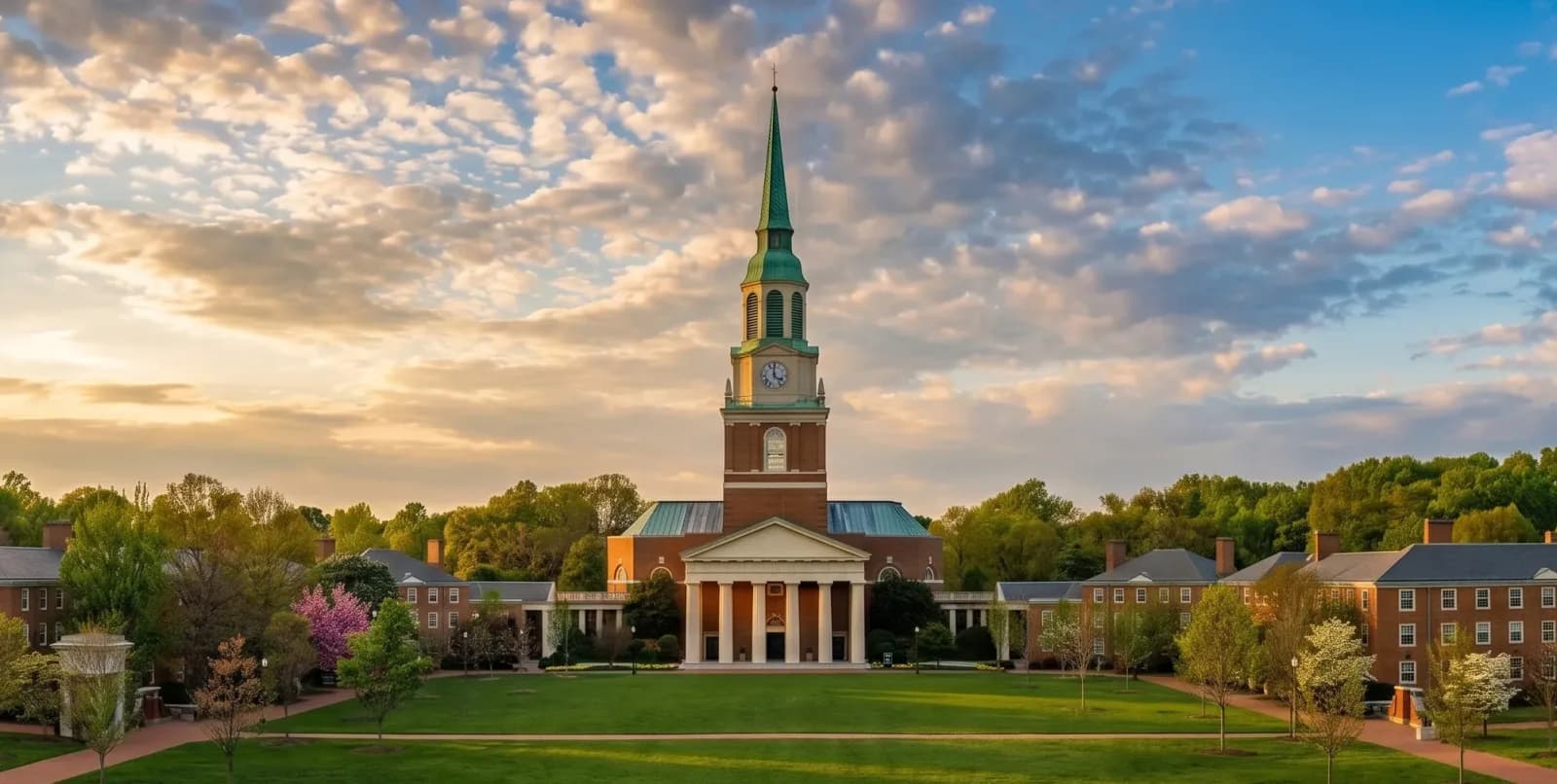
Wake Forest University campus
Merit tiers8See requirements
Get merit aid3%First-year students, CDS 2024-2025
Last verifiedMay 2026Analyst PT

Quick verdict

Worth a full-application push only if your student is a top-of-class, holistically distinctive applicant — there is no stats-automatic merit safety net here.

Wake Forest gives nothing automatic on GPA or test score. Every merit award is committee-selected from the applicant pool. The ceiling is high: the Signature Scholars cohort (Nancy Susan Reynolds, Carswell, Gordon, Graylyn) covers tuition, room, and board plus a $3,400 annual stipend and per-summer project funding, while the Stamps covers tuition, fees, room, and board plus a $3,400 books-and-personal allowance and up to $15,000 over four years. Against a 2026-27 COA of $98,730, these are full-ride-class — but the Signature awards name only tuition (not fees) and exclude indirect costs, so they may not zero out the entire bill; Stamps explicitly covers fees and lands closest to true full COA. The only firm flat-dollar renewable merit award is the Presidential Scholarship for Distinguished Achievement at $16,000/yr, for documented talent in art, dance, debate, music, or theatre. Hard deadline: submit the admission application by November 15 for Signature Scholars (December 1 for Leadership and Character). Stacking is mixed and protective — outside awards may reduce need-based loans and work-study and cannot exceed COA, so for a full-ride-class scholar outside scholarships add little or no net cash.

Rules that bite at Wake Forest

The trip wires we'd flag in a custom playbook. Each is derived from Wake Forest's own published policy, not generic advice.

  • cliffOne ACT point can move the award by not cleanly computable

    Wake Forest publishes a tier ladder where crossing Presidential talent award vs. a Signature/Stamps full-ride-class award changes the marginal value by not cleanly computable. The Presidential is a fixed $16,000/yr. The Signature awards cover tuition, room, and board (tuition cannot be separated from the combined tuition-and-fees COA line of $73,170, and they exclude indirect costs), and Stamps adds fees — so neither resolves to a single dollar figure. The Signature/Stamps awards are clearly far larger, but the exact delta does not trace to the verified data, so no subtraction is asserted.

  • displacementDifferent aid types are displaced differently

    Wake Forest treats loans, work-study, and institutional grant under different rules. The same $5,000 outside award can land against any of them depending on category.

Common merit-aid mistakes at Wake Forest

  1. Wake Forest has been test-optional since 2008 and does not publish an SAT or ACT to dollar-amount grid. All merit scholarships are competitively awarded through holistic review. Submitting a high score will not trigger an automatic merit offer the way it would at Alabama, Arizona, or Ole Miss. The CDS rates standardized test scores as only Considered, not Very Important, for admission.

  2. The five core Signature Scholarships (Reynolds, Carswell, Gordon, Graylyn, Stamps) are full-cost-of-attendance merit awards that do not require financial need. However, the Leadership and Character Scholarship does require need-based aid eligibility, and the Poteat Scholarship requires North Carolina Baptist church membership plus need. Families should not assume all full scholarships at Wake Forest are purely merit-based.

  3. Wake Forest's Signature Scholarships do not require a separate application, but recipients are selected from admission applications submitted by November 15. The Presidential Scholarship for Distinguished Achievement has a priority deadline of November 15 and closes January 4. Applicants who apply Regular Decision (January 1) may still be considered for some awards but lose priority consideration for the top-tier programs.

What a Wake Forest applicant can actually win

Wake Forest merit is committee-selected, not stats-automatic. Profiles below describe the type of applicant each award targets — none is guaranteed by a number, and none of these tiers carries a single clean dollar value to subtract against another.

Student profileLikely outcome
Documented talent in art, dance, debate, music, or theatrePresidential Scholarship for Distinguished Achievement — $16,000/yrThe only firm flat-dollar renewable merit award. 20 awards/year. Priority deadline Nov 15; application closes Jan 4.
Need-qualified applicant with demonstrated moral leadershipLeadership and Character Scholarship — full scholarship toward educational costsNeed-meets-merit hybrid: must qualify for need-based aid. Admission application due Dec 1.
Exceptional scholar and creative leader (full applicant pool)Signature Scholars (Reynolds / Carswell / Gordon / Graylyn) — tuition, room, board + $3,400/yr + up to $5,000 per summer for 3 summersFull-ride-class but names tuition only (not fees) and excludes indirect costs. Reynolds, Carswell, and Gordon are up to ~5 awards each per year; Graylyn is 1 per year. Selected from the admission pool, no separate application. Finalists notified end of March.
Leadership, service, perseverance, innovation (full applicant pool)Stamps Scholarship — tuition, fees, room, board + $3,400 allowance + up to $15,000 over four yearsThe only Signature-cohort award that explicitly covers fees, so it lands closest to true full COA. Approximately 15 awards/year — the largest cohort of full-ride-class awards at Wake Forest.

Why there is no dollar-step ladder here

Wake Forest publishes no stats-driven merit table, so there are no test-score bands to subtract across. Only one merit tier carries a firm single dollar value — the Presidential at $16,000/yr — and the full-ride-class Signature and Stamps awards are described as coverage of named cost categories (tuition, room, board, and for Stamps, fees) rather than fixed dollar amounts. Because no two tiers share clean, subtractable dollar figures, no exact arithmetic gap can be computed.

ThresholdMarginal value
Presidential talent award vs. a Signature/Stamps full-ride-class awardnot cleanly computableThe Presidential is a fixed $16,000/yr. The Signature awards cover tuition, room, and board (tuition cannot be separated from the combined tuition-and-fees COA line of $73,170, and they exclude indirect costs), and Stamps adds fees — so neither resolves to a single dollar figure. The Signature/Stamps awards are clearly far larger, but the exact delta does not trace to the verified data, so no subtraction is asserted.

Who this school is for

Families of high-achieving students with standout extracurricular profiles, leadership, and character, not stat-line optimizers. Wake Forest has been test-optional since 2008 and does not publish automatic GPA or SAT merit grids, so there is no formula to reverse-engineer. Starting Fall 2026, the NC Gateway program makes Wake Forest tuition-free for North Carolina families earning under $200,000, which fundamentally changes the value equation for in-state applicants.

Cost of attendance$98,730 for 2026-2027Each bar is the full published cost for that scenario, sized against the highest figure so totals compare at a glance.
On-campus$98,730
  • Tuition & fees
  • Housing & food
  • Books
  • Personal
  • Travel
  • Loan fees

Living on campus. Health insurance not included.

Wake Forest cost-of-attendance source

Institutional merit aid tiers

Every tier below is sourced to the school’s own published financial aid pages. Renewal terms apply only if the student maintains the stated GPA.

Tuition, room, board, plus $3,400 annually, plus up to $5,000 per summer for research, study, or travel projects (3 summers)

Nancy Susan Reynolds Scholarship

ApplicationRenewable
View requirements
Eligibility

Selected from the admission applicant pool. No separate application required beyond the admission application submitted by November 15. Finalists notified by end of March. Seeks students who are not only excellent scholars but also creative leaders able to influence others in directions likely to benefit society.

Renewal terms

Renewable for four years. Four-year on-campus residency requirement. Annual apologia (2-3 page reflective essay) required. No specific renewal GPA threshold is published on wfu.edu.

Notes

Up to 5 awards per year. Wake Forest's oldest and most prestigious merit scholarship. Part of the Signature Scholars cohort.
Source

Tuition, room, board, plus $3,400 annually, plus up to $5,000 per summer for research, study, or travel projects (3 summers)

Guy T. Carswell Scholarship

ApplicationRenewable
View requirements
Eligibility

Outstanding qualities of academic promise, leadership, and talent. Selected from the admission applicant pool. Admission application submitted by November 15. Finalists notified by end of March.

Renewal terms

Renewable for four years. Four-year on-campus residency requirement. Annual apologia required.

Notes

Up to 5 awards per year. Part of the Signature Scholars cohort.

Source

Tuition, room, board, plus $3,400 annually, plus up to $5,000 per summer for research, study, or travel projects (3 summers)

Joseph G. Gordon Scholarship

ApplicationRenewable
View requirements
Eligibility

Exceptional promise and achievement; members of underrepresented groups. Selected from the admission applicant pool. Admission application submitted by November 15. Finalists notified by end of March.

Renewal terms

Renewable for four years. Four-year on-campus residency requirement. Annual apologia required.

Notes

Up to 5 awards per year. Part of the Signature Scholars cohort.

Source

Tuition, fees, room, board, plus $3,400 allowance for books and personal expenses, plus up to $15,000 total over four years for approved travel and study

Stamps Scholarship

ApplicationRenewable
View requirements
Eligibility

Leadership, perseverance, scholarship, service, and innovation. Selected from the admission applicant pool. Admission application submitted by November 15. Finalists notified by end of March.

Renewal terms

Renewable for four years. Four-year on-campus residency requirement. Annual apologia required.

Notes

Approximately 15 awards per year. Part of the Signature Scholars cohort. Funded through the Stamps Family Charitable Foundation.

Source

Tuition, room, board, plus $3,400 annually, plus up to $5,000 per summer for research, study, or travel projects (3 summers)

Graylyn Scholarship

ApplicationRenewable
View requirements
Eligibility

Leadership and academic excellence. Selected from the admission applicant pool. Admission application submitted by November 15. Finalists notified by end of March.

Renewal terms

Renewable for four years. Four-year on-campus residency requirement. Annual apologia required.

Notes

1 award per year. Part of the Signature Scholars cohort. Started in 1990. Funded by and in recognition of the Graylyn International Conference Center.

Source

Full scholarship toward educational costs

Leadership and Character Scholarship

ApplicationRenewable
View requirements
Eligibility

Must apply for and qualify for need-based financial aid in the first year. Demonstrated moral leadership. Admission application submitted by December 1 to be considered.

Renewal terms

Four-year on-campus residency requirement. Annual apologia required.

Notes

Part of the Signature Scholars cohort. This is a need-based-meets-merit hybrid: applicants must qualify for need-based aid. Includes leadership and character programming designed specifically for scholars.

Source

$16,000 per year

Presidential Scholarship for Distinguished Achievement

ApplicationRenewable
View requirements
Eligibility

Exceptional talents in art, dance, debate, music, or theatre. Must submit documentation of outstanding talent (portfolios, debate records, taped performances) and recommendations. Priority deadline November 15; application closes January 4. Finalists interviewed by early March; winners notified late March. Need not major in the talent area but must participate actively in that activity on campus.

Renewal terms

Renewable for four years. Four-year on-campus residency requirement. Annual apologia required.

Notes

20 awards per year. Established 1987. Presidential Scholars with interest in dance, music, or theatre are given preference for an internship with the Secrest Artists Series.

Source

Full need-based funding

William Louis Poteat Scholarship

ApplicationRenewable
View requirements
Eligibility

Must be an active member of a North Carolina Baptist church. Excellent academics and leadership promise. CSS Profile and FAFSA by January 1. Church recommendation by February 1. Finalists notified by end of March.

Renewal terms

Renewable for four years.

Notes

Up to 20 awards per year. Need-based-with-denomination hybrid. A legacy of Wake Forest's Baptist heritage (formal ties severed in 1986, but the Poteat endowment remains). Value varies by individual need determination.

Source

Outside scholarship stacking policy

External scholarships are added to the financial aid package if possible, but federal rules may require reductions to need-based loans and work-study, and total aid may not exceed the cost of attendance.

Wake Forest's published policy states that external scholarships are added to an original financial aid package if possible, and that in some cases based on federal student aid program rules, external scholarships reduce need-based student loan and work-study eligibility. In no case may aid exceed the estimated cost of attendance. Students must notify the financial aid office in writing if outside assistance is received, and aid must be adjusted if additional resources reduce demonstrated need or federal eligibility. For the small number of students on full-COA Signature Scholarships, outside awards are unlikely to add net dollars because the scholarship already covers the full cost of attendance.

Source

Common Data Set snapshot

From the Wake Forest Common Data Set 2024-2025:

Merit penetrationHow likely is merit aid here?From Wake Forest’s Common Data Set: the share of first-year students who receive institutional merit and the average dollar amount when they do.
3%of admitsget merit
Average award$22,826Covers ~23% of $98,730 cost of attendance

At Wake Forest, roughly 1 in 33 first-year admits receive institutional merit aid. The average award is $22,826about 23% of total cost.

SAT mid-50%1420–150025th / 75th percentile
ACT mid-50%32–3425th / 75th percentile
Receive institutional merit3%First-year students
Average merit award$22,826Across recipients

Source: Common Data Set

Lesser-known scholarships at Wake Forest

Named awards that don’t always surface on the main financial aid page. Each one has its own eligibility rules.

AmountFour-year half-tuition scholarshipEligibilityHigh school student in North Carolina interested in majoring in Physics at Wake Forest. One award granted every four years to a single recipient. Application deadline February 15.

Next available for a first-year student entering Fall 2026. Administered by the Department of Physics, not the main scholarships office.

Source

Amount$5,000 per yearEligibilityDemonstrated entrepreneurship potential. Letter describing entrepreneurship interest required by January 15. Single award given every four years.

Next available to a first-year student entering Fall 2026. Published on the main scholarships page but easy to overlook because of the four-year award cycle.

Source

AmountUp to $2,000EligibilityStudents pursuing intensive language study in Germany or Austria.

Departmental study-abroad award. Not listed on the incoming merit scholarships page; appears only on the upperclass scholarship opportunities page.

Source

Wake Forest merit aid FAQ

  • Does Wake Forest offer automatic merit scholarships based on GPA or test scores?

    No. Wake Forest awards merit scholarships to fewer than 3% of first-year applicants through competitive holistic review. There is no published formula linking GPA, SAT, or ACT scores to a guaranteed merit award. Wake Forest has been test-optional since 2008 and rates standardized test scores as only Considered in its admissions process.

  • Do I need to submit a separate application for merit scholarships?

    For the Signature Scholarships (Reynolds, Carswell, Gordon, Graylyn, Stamps, Leadership and Character), no separate application is required. Recipients are selected from the admission applicant pool. The Presidential Scholarship for Distinguished Achievement does require a separate submission with talent documentation (portfolio, recordings, debate records), with priority deadline November 15 and closing January 4.

  • What is the NC Gateway program, and does it affect merit aid?

    Starting Fall 2026, the North Carolina Gateway to Wake Forest University makes Wake Forest tuition-free for admitted North Carolina residents in three income tiers. Families earning under $100,000 receive aid covering both tuition AND standard living expenses (housing, food). Families earning $100,000 to $200,000 receive aid covering tuition only (families pay standard living expenses and applicable fees). Families earning $200,000 to $300,000 receive 50% tuition coverage. This is a need-based program, not a merit scholarship. It requires annual FAFSA and CSS Profile filing. NC residents can still receive merit scholarships on top of NC Gateway aid, subject to the cost-of-attendance cap.

  • Can I stack outside scholarships with Wake Forest merit aid?

    External scholarships are added to the financial aid package if possible, but federal rules may require reductions to need-based student loans and work-study. Total aid from all sources cannot exceed the estimated cost of attendance. Students must notify the financial aid office in writing about any outside awards.

  • What is the Magnolia Scholars program?

    Magnolia Scholars is a program for approximately 30 first-generation domestic students per class that provides financial support covering tuition, fees, room, board, and books, plus summer study grants, study abroad funding, and research opportunities. Selection is based on essays, recommendations, and interviews from the admission application. It is not listed as a named merit scholarship but functions as a cohort-based aid program for first-generation students.

How Wake Forest compares across our verified dataset

  • 19 of 203 verified schools in our dataset use mixed displacement.

    Wake Forest is in the small minority (19 schools share this category). That framing matters when comparing peer schools that may publish the policy differently or not at all.

  • 178 of 203 verified schools publish at least one four-year renewable merit award.

    Wake Forest is one of them. The cohort minority (25 schools) only awards one-year scholarships, which means the four-year value families assume on a brochure quote isn't guaranteed at every school.

  • 63 of 203 verified schools publish a marginal-value cliff table we can quantify.

    Wake Forest is one of them. Most schools won't tell families what one ACT point is actually worth. At the schools that do, a strategic retake is sometimes mathematically more valuable than test-optional positioning.

Sources used on this page

Every claim is checked against Wake Forest’s own published materials. Below is the full reference set.

Compare with similar schools

  • Duke merit aid North Carolina private school — compare automatic merit, amounts, and stacking.
  • Davidson merit aid North Carolina private school — compare automatic merit, amounts, and stacking.
  • Elon merit aid North Carolina private school — compare automatic merit, amounts, and stacking.
  • High Point merit aid North Carolina private school — compare automatic merit, amounts, and stacking.

Keep exploring Wake Forest merit aid

Get your student’s plan$99